Showing posts with label Camden. Show all posts

Wednesday, November 24, 2010

Some days are diamonds…

Nope, I didn’t achieve a gliding goal, I’m referring to the next phrase – “some days are stone.” I was duty pilot again on the weekend and my only goal achieved was to barely keep things operating on a busy and very hot and sweaty day. I didn’t even get to fly myself which is a bit of a pattern for duty pilot days.

I attended an extraordinary general meeting at the club on the Saturday evening to help make a quorum for a vote on the club buying a new ASK-21 (which vote passed successfully). The club’s two metal IS-28s are essentially either unserviceable (awaiting parts) or life-expired. Now with the club’s only K-13 in the workshop (and the previous K-13, which would have required extensive work to bring it back to flying condition, sold), the shortage in two-seaters exposed the need to keep the fleet current and supported.

The current ASK-21 has been popular and resulted in a jump in use. Plus they are pretty bullet-proof, benign, so a good trainer, rarely subject to ADs still being made, have been around a long time, but still look modern.

I think this latter point is important for air Experience Flights (AEFs) and trainee pilots. While I learnt a lot flying IS-28s, I never liked the look of them – like a cross between a vintage car and a Russian tractor. Lord knows what an AEF would think of it. And while the K-13 is a pretty aircraft and nice to fly, it looks like a world war one vintage plane.

I think the ASK-21 is the right way to go for a glider that will be used potentially for training as well as air experience flights.

I slept overnight in the clubhouse ($8.00 – bargain expect for the mossies) but it was a hot uncomfortable night. However, it helped me to be there for duty pilot duties the next day without having to drive more than a hundred kilometres late at night and early in the morning.

It was one of those days – hot – about 35 degrees and incredibly humid, with a building sky threatening thunderstorms, there were a bunch of students, an AEF (and another who walked up with a gift certificate) and two families inquiring about flying for their kids. Along with a shortage of two-seater gliders for training and AEFs, it made for a busy day. A general absence of experienced club members meant that the workload was pretty high (experienced members will grab a car or tractor for retrievals etc) for me.

In addition, two new tug pilots were being trained and in addition to making some of the launches a little bit slower, the tug disappeared for a while over to the fuel bowsers for a new tuggie to be briefed on fuelling procedures. I gained a new respect for tow-pilots though, as one of the new guys positioned the tug just beyond the rope length from the glider, meaning I had to push gliders (complete with crews inside) forward a couple of times so I could hook up the tow-rope!

Organised a reasonable number of launches, but the day seemed to be hectic the whole time, not to mention hot. Two senior members took the DG-1000 off on a bit of a cross-country, which meant we only had one two-seater for a while, so after an hour I got Camden ground to call them back.

All in all, a busy day, not an enjoyable duty pilot experience and I didn’t get to fly myself.

Sunday, October 3, 2010

Washed out

I was scheduled to be duty pilot today, but the weather forced us to cancel flying. Even though it's a long weekend, there weren't many folk who had put their names down on the flying intentions page. Two students and one AEF, so it would have been a quiet day. Here's the process I went through.

The club has a member who is a meteorologist and he has developed his own section on the club's forum where he makes predictions for upcoming days. Given I live 45 minutes from the club and weather conditions at Camden can be vastly different from home, I can't really look out of my window and work out what the day will be like. I called the Automated Weather Information Service for Camden just after 6.00 am, but it was inconclusive.

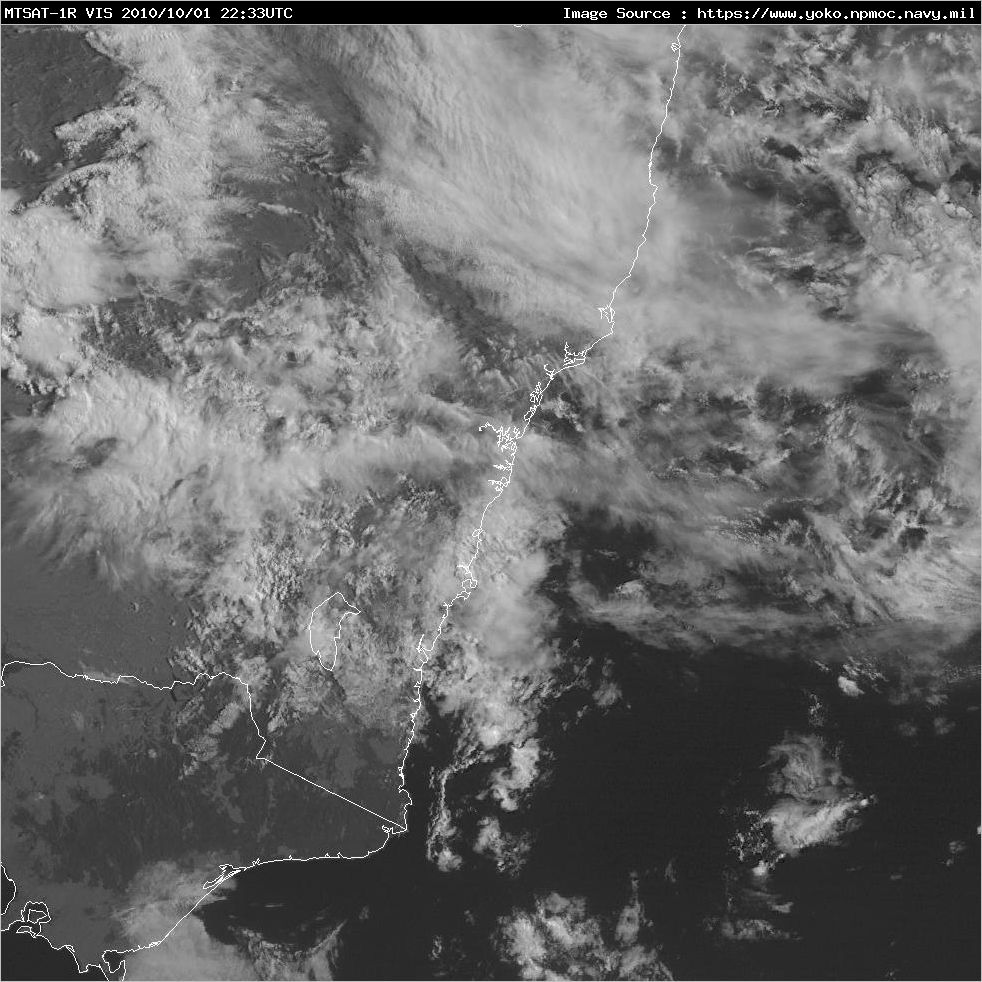
Sydney Weather 2 October 2010
I waited until 7.15am but the gliding forecast on the club's forum hadn't been updated, so I had to head out to the club. I got there at 8.00 am to find a grey day, cloud from 1,500 feet to 3,800 feet, and gentle rain. Our tame  meteorologist had updated his forecast and indicated that 25mm (1 inch in the old money) of rain had fallen in the past 24 hours and a NOTAM was expected that would close the grass strips that we operate off (too boggy).

However, as Duty Pilot I can't make that call alone, so I had a series of phone calls to make to the Duty Instructor and to the AM tug pilot and the two intending students, as well as the man who had booked the Air Experience Flight (AEF) before wending my way home through the rain.

Disappointing.

Monday, September 20, 2010

My longest flight so far


After a long period of work and family committments, I found a Sunday when I could be entirely selfish and spend a day at the club. The day before had been a lovely warm Saturday, but with ominous cirrus indicating a cooler day to come. Our club's resident meteorologist had forecast reasonable days on the weekend, so in a gloomy overcast Sunday morning I fired the car up for the 55km trip to Camden.


Thermalling

The weather's often quite different at Camden compared with Sydney, so the local conditions near my house are no indication of what's happening at the strip.

It was clearer at the strip when I got there (and helped the duty pilot get the aircraft out and washed and DI'd), but there was a lot of high cirrus, with areas of cirrostratus to the north, so it looked like lift would be kept down.

I am now on check solo with the club, requiring a dual check with an instructor before each solo flight (5 in total before going to daily checks), so I had my first check flight, which the instructor considered as "a bit mechanical". He suggested a second check flight immediately, saying "you can be smoother Brian", and I was smoother on tow, doing coordinated turns this time and with a much smoother landing. He signed me off for solo and then the waiting started.

It wasn't too busy a day at the club - only one Air Experience Flight (AEF) booked for 12 noon and only three students including myself competing for two training aircraft (our ASK-21 and the ASK-13). The AEF didn't turn up, so it was not a long wait before I was able to go up.

The day had improved somewhat and the flight before mine had managed a 50 minute flight, with the instructor indicating that there was a little lift around (1-2 knots) but you needed to work for it. On my first and second check flights there were a few scattered Cu's, but not far above them, clear small lenticular clouds, indicative of wave. The two airmasses were crossing each other and making things bumpy underneath. By the time I lifted off for my solo flight (only my second at Camden) things had changed and there were larger dark Cu's in an overcast sky (higher cloud) with some blue patches.

Takeoff and tow were those wonderful sensations of lightness and bouyancy from being one person in a two-seater. Quickly got to 3,000 and bunged off and then started wandering about the sky. On this initial flight I had no more plans than making sure I did more than a circuit. I knew I could fly a circuit by myself, I now wanted to see if I could get around the sky and stay up by myself.

Over Camden
It helped that there was some lift about and I quickly found that I could find and centre (reasonably well at first and better later in the flight) lift under these Cu's and I worked up from 2,500 feet to a dizzying (for me) 3,800 feet, near cloudbase! This was wonderful - I circled and thermalled with the vario beeping at me, keeping a lookout for other aircraft (the glider I was in - NKC the club's ASK-21 - is fitted with a Flarm and it regularly told me about other gliders in the air with me, mostly west of me) and exploring. I flew south to the high ground of Razorback, pointed my nose towards the Oaks, (which I couldn't really see, it was hazy as anything up there), headed east back over Camden and well upwind of the strip and just generally flew the glider around. I saw jets and prop planes passing by overhead, spotted other gliders, looked down at birds below me and took lots of photos.

I was ecstatic and had to keep checking that I wasn't all tensed up. A couple of times I found myself with my legs and feet braced as though I was riding a horse and I had to remind mysefl to relax and enjoy things. It took me about 40 minutes before everything smoothed out and I really calmed down and actually enjoyed the sensation of flying about and seeing the sights. I ended up thermalling south of the downwind end of the runway, seeing a single-seater and the K-13 flying beneath me. Lovely.

After almost an hour I thought I should return the glider so others could enjoy the day. The problem now was to lose all the height I had built up. I flew upwind, finding lots of lift, but not pursuing it. Over Camden I circled to lose some height, but I was surprised how long it took me to get back down to joining height.

And as is usual with probably every gliding club in the world, downwind and base were a sea of lift. I had to extend downwind a lot more than I'm used to because I'd lost little height in downwind, so I had a nice long final down to a smooth and pleasant landing.

At one hour 8 minutes, it was my longest flight so far, and even more satisfying was starting to work out that I can do more than just fly a circuit - that I may actually be able to fly a glider successfully by myself!

Sunday, July 25, 2010

Duty Pilot - 17 July 2010

After soloing again in May, it's a long wait, because of work and family, until I have the chance of flying again. I am on the roster as Duty Pilot again and I'm so keen to get to the club that I turn out of bed at 6.00 am after getting back from overseas the night before.

Arrive at the club on a cold morning (5 degrees C) before 8am and, with the help of a couple of other members, start getting all the gear ready and off to the hangards to prep aircraft. It's a busy day - 4 Air Experience Flights, a visiting overseas pilot from South America and plenty of trainees and club pilots finishing their annual checks.

The weather is benign with gentle variable winds and the chance of some thermals around 1.30pm, once the ground heats up. The most frustrating thing is end changes by the control tower. We get two of these - shift everything down to 24 and then about an hour later, shift everything back to 06. Each end change kills about 30-45 minutes as the pie cart has to be closed up and laboriously towed by tractor to the other end of the strip; as well as the aircraft on the ground.

A total of 23 launches, all the two-seaters in use, lots of certificates presented and even arranged a few photos of the ASK-21 to be used as the background of first solo certificates (since it's a newish aircraft).

I finally get on the road home at about 5.15pm and I never even got to fly. One of the frustrations of Duty Pilot - I did all I could to make sure others flew (and some folk got in three flights - the longest flight was 1 hour 11 minutes - not bad for a winter day) - but I stayed on the ground.

At least I had the satisfaction of having my first real Duty Pilot experience go off well (with the welcome help of plenty of other club members).

Sunday, May 9, 2010

Glorious Autumn Soaring

Monday 26 April 2010


Looking back over my logbook, I find most of my training flights at Camden have been short, generally under 20 minutes, so it was nice on this day to have an almost 50-minute flight.

The club was operating from runway 24 and I arrived with the intention of doing spins, further to my last instructor’s notes. The aircraft available to me (it was a busy day at the club - pretty much every club twin and single and a couple of private ships were on the line - see the photo) when it was my turn to fly, was the venerable K-13.

My takeoff was a bit messy (two years since I’d flown a K-13) and I took a while to cancel out some bobbing up and down immediately after getting off the deck. Even with forward trim the damn thing wanted to climb and it took real effort to keep it in line behind the tow-plane. It was fine on the climb out.

I had signalled to the tug pilot for a tow to 3,000 feet, but it was a booming day and, as I was discussing potential landout options from the 24 runway in case of a rope break with the instructor, he suddenly bunged me off at about 1,200 feet. Earlier I had watched the pilot of a club single-seater get off tow just beyond the end of the runway and then thermal steadily to 4,000 odd feet before setting off. I had deliberately wound the altimeter around so it would be effectively useless for circuit and landing, which I wanted to do solely by eye. On tow, the variometer had shown steady lift beyond the runway. In reference to the land-out options, the instructor’s comment was “well, let’s take a closer look.” And pulled the plug. After I settled into flying speed and had done my release checks, he said “alright, find a thermal”.

The whole sky was going up and it was easy to find a big 4 knotter just west of the runway. This was glorious flying at Camden, where I had previously scratched around for tiny thermals over the suburbs. Here was a big fat thermal I could ride right up to 4,500 feet. It was still going, but I was getting close to the airspace limit (4,500 this close to Camden) and my intention was to do some spins.

The air was particularly clear, the clearest I had experienced in the normally hazy Camden and I could see out to Lake Burragorang to the west (though I wasn’t high enough to see the lake itself) and in the other direction I could see Port Botany and the Sydney CBD about 50km away.

We headed west towards The Oaks, a 3,100 foot small airstrip remnant from a WW2 satellite aerodrome to Camden, now used by the Sydney Recreational Flying Club - which the gliding club uses for outlanding training. I’d never seen it up close but with all this (relative) height in hand, we trundled over there to identify it. Here’s how it looks from the air (via the excellent Nearmap).

After a HASLL check, we commenced to spin. The instructor put me into spins both from banked turns and from straight ahead stalls, which I had no problems recovering from (I quite like spins, the sudden precipitous plunge and roll) and then we spent some more time enjoying the day. The sky was still going up so I searched for thermals and regained all my height. At one point I saw the club’s Junior above me and joined his thermal. It’s lovely to fly with another aircraft (though busier, in terms of keeping sight of the other aircraft) because of how graceful gliders look in the air. I managed to climb better than the Junior and just before I reached his altitude (about 4,000) he left the thermal and tracked away east.

Around this point I heard a radio call from a power plane approaching Camden from The Oaks and scanned until I saw him (my instructor saw him first, below and west and yawed the nose to point at it. It still took me a couple of seconds to spot it. Aircraft are hard to see at any sort of distance). The Cessna crossed our nose several hundred feet below.

After a bit more flying it was time to get back down to earth to allow others to fly the K-13, so the instructor decided to throw away some of this height via aerobatics. We did two loops in a row (nose down to 100 knots, then a smooth pull up for 1G at the top), followed by two big chandelles/wing-overs. I’ve never been airsick, but after these manoeuvres done in a short period of time, I felt a bit crook and had to breathe open-mouthed for a while before the stomach settled down!

Having shed some height, I joined the circuit for 24 and managed downwind, base and final without reference to the altimeter. The apparent nose-down attitude of the K-13 meant that I had to really watch my speed as I wanted to have the nose higher for the sight picture I normally see in the other club two-seaters. My final was a little high because I waited a little while before applying airbrakes to establish the overshoot on my aiming point, and ended up having to get more than half-brake out on mid-final. On touch-down though, the plastic grip on the airbrake handle came off in my hand, just as I was applying more brake to shorten the ground-roll! It gave me a bit of a fright, as for a split second I held it in my hand working out what to do with it. I kept the glider under control however. I noticed in the glider’s DI book that the loose handle had been a minor defect for some time. I made sure to put an updated note in the book for subsequent pilots.

So, spins are signed off and I hope just a few more circuits are required before I can have my second first solo. I’m definitely feeling better about judging angles by eye and I can tell I’m more relaxed because final feels so much longer, with seemingly more time to think. In some previous flights things had seemed so hectic and fast after the turn to final.

Thursday, April 29, 2010

Air cadets

28 February 2010


Further to being a useful gliding club member, I volunteered to help some of the club members (ex Air Force and/or Air Force Reserve) operate a flying day for the local Air Force Cadets. About 20 cadets would have flights in a club two-seater through the day and there was a call via the usual email contact for members to help out.

I arrived early as usual and helped get the aircraft ready and listened in to the briefing of the cadets, I was offered (and accepted) a quick first flight in the K-21 before the cadet flights began (about 10.00 am). The day started as still, with a misty sky and high cloud. No thermal activity at all and so perfect for circuits. Tow to 2,000 feet was the smoothest I’d ever felt. I could have flown the tow hands-off I reckon.

No lift, but no sink either once I was up there. I worked on judging the break-off point and angles to the strip. I flew my circuit a little wide and still ended up a little high (turned in a bit too early), had to get a fair bit of brake out, then was able to put some away and come in on half brake. I felt more comfortable managing the brakes to keep the aiming point where I want it than I had for a while.

I lost a little directional control on the ground though and end up slewing a little left in the landing run. Not sure what happened. But man, the wheel brakes are good on the K-21, unlike any other glider I’ve flown.

After this first flight (14 minutes), I helped out with getting cadets strapped in, briefed and launched, including making sure each of them participated in a launch – retrieving the tow-rope, signalling the required tow height to the tug pilot, hooking on and waving off etc.

There was lots of this and as the day progressed the weather heated up and the unmistakable signs of an afternoon thunderstorm could be seen in the west (unusual, the usual direction for summer thunderstorms in Sydney is the south).

There were other club members flying in addition to the cadets and at one point, later in the afternoon, the club’s DG-1000 was without a taker. I quickly took up the offer (though I found the DG a handful on my last flight in it, in Cootamundra) and took a tow to 2,000 feet for more circuit practice. Not a remarkable flight and I was happy with my circuit, approach and landing. My instructor wrote “General flying good, work on circuit.”

After a few more launches for the cadets, we’d got the last of them off as lightning started to flicker and a wall of black cloud built up. There was a dramatic storm later, which I raced ahead of down the M5 Motorway home.

Saturday, April 5, 2008

Radio endorsement and a hazy flight


Off to Southern Cross at Camden today (Saturday 5 April 08) to attend a half-day Radio Procedures course put on by the club (a Flight Radiotelephone Operator authorisation is a pre-requisite for solo at the club and is a Gliding Federation requirement) and I hope to get in the final three of my pre-paid flights. The course started at 9.00 am, so I was on the road before 8.00 am for the 45-minute or so drive down the motorway.

The instructor, Woody, had efficiently posted out the course notes more than a week beforehand, so I'd done a bit of reading and searched on the net for relevant material. When I'd looked for Visual Terminal Charts (VTCs) for Camden, I'd come across a useful and attractive little download from the CASA (Civil Aviation Safety Authority), called the Sydney Basin Visual Pilot Guide for Fixed Wing Aircraft - see here www.casa.gov.au/pilots/download/sydney/sydney.pdf

It has lots of useful information on procedures, colour photographs etc. Nice.

This was the first time I'd been at the actual clubhouse, which is located in the bustle of buildings at the aerodrome (usually I have arrived around midday and headed straight to the strip). I relaxed for a while drinking coffee, chatting to the other students and some of the club stalwarts who were getting set up for the day and flicking through flying magazines.

It was very hazy outside, blue skies and no wind to speak of. This became important later.

It was a good course, covering airspace classification, the various charts and other info we use (WACs, VTCs, VNCs, ERCs, ERSA) and the procedures at Camden and other nearby aerodromes, particularly CTAF and CTAF-R aerodromes; radio procedures and typical calls, distress calls, and weather reports and forecasts.

Midway through the course, we were informed that the aerodrome had been closed because of poor visibility from smoke. Bugger. It looked like I was going to miss out on flying today.

However, towards the end of the course, I saw a couple of planes taking off and after getting my precious Radio Operator Endorsement sticker in my logbook, I zipped down to the field to see if it would be worth staying.

As I got there, the club had been informed the field was to be reopened in about 20 minutes. I'd already got my name down on the flying list first thing in the morning, so I was pretty sure I could get at least one flight that day. The field being closed for several hours had caused a hell of a traffic jam. Every working glider in the club fleet was out on the field waiting for the off and several privately-owned ships; and there was a full roster of AEFs (Air Experience Flights - the punters who help fund the club). Two of the club's Pawnees were waiting to go. There was going to be a wait.

As the field started to get active, I made myself busy waving off and wing-running and pretty soon the sky was full of gliders. Most released over Narellan way where there seemed to be some lift, despite the seeming lack of any wind to trigger things, but one cross-country flier, another Brian, took his tow well south, aiming to go to Picton and back.

Finally the IS-28 came back from a flight with a Japanese pilot who had turned up on the day to join the club; and it was my turn. By this time, it was almost 2.00 pm and the smoke had cleared away (though it still looked hazy). Pretty blue, but some cloud building to the west.

Clive was my instructor and we ran over my experience and logbook and talked about what I wanted to cover in this flight (local landmarks and familiarisation and approaches/landings). Then I got settled in the tractor-like machine and got in the air. A slightly messy takeoff (seemed to happen too soon), I dropped a wing, recovered, got onto the main wheel okay, got off the deck and held the glider nice and low, and then when the tug got off, I slotted into low tow.

On my third tow in Australia, low tow held no horrors for me. It had clicked and I could relax (got to learn to do that before takeoff!). I was planning to release at 3,000, but got to talking to Clive and keeping a sharp lookout (lots of other aircraft up there) and I'd reached 3,500 before i woke up and bunged off (pulled the plug, as they seem to say in the club).

It was still very hazy and smoky up top - no real distant views and even looking at local landmarks was tricky. The other Brian later said he had been unable to see the field from 20 kms south!

After getting the gear up, the flaps off her and trimmed for 55 knots, we stooged around a bit identifying landmarks and airspace boundaries, by which time we'd lost a thousand feet or so, so I found some steady lift, centred it eventually, and then climbed back up to 3,800 feet.

A few exercises - stalls (interesting this, with my normal stall approach - lift the nose steadily, hold stick back and back until the stall - the IS-28 would stall at about 35 knots. However, when I tried a gentle stall, only a bit of nose up and a slower washing off of speed, what looked a gentle angle of attack, the thing stalled at 40 knots!), stalls with incipient spins off banked turns, and some steep turns with constant airspeed, it was back to the field to join the circuit.

I did the radio call (first one since the endorsement), then did my downwind checks. I found I was starting to crowd the circuit a bit, had to extend a bit before turning base, had to use full brakes and sideslip a bit, but then went to half-brakes, managed my speed well, rounded out okay, but landed a bit early, with a small bounce.

Clive's comments - next flights, practice circuits. He marked up my logbook "flying well, practice circuits and landing."

Still busy when I got back, so no chance of another flight. Had to go to a family dinner, so pulled the pin about 4.45pm. Saw a young guy who been on the radio course with me go solo in the K13 - got a nice memory of my solo and knew how he felt.